Corporate holiday party ideas for Houston teams, sorted by format: who each one suits, what it takes to pull off, and where it usually goes wrong.
Most Houston companies default to the hotel ballroom for the same reason most people order the chicken. Nobody gets blamed for it. It works. It is also the format most likely to have people checking the time by 8:30.
We’ve planned corporate events in Houston since 2009, and the pattern holds year after year. A holiday party works when the format fits the group: headcount, company culture, who’s invited, and what leadership is comfortable with on alcohol. Themes and centerpieces matter far less than people expect. (If you’re still settling dates, start with when to book a Houston corporate holiday party. This post assumes you’re past that and deciding what to actually do.)
Below are eight formats, organized by situation rather than novelty.
Eight Corporate Holiday Party Formats, Sorted by Situation
1. The Seated Dinner
Who it suits: Leadership teams, professional services firms, client-appreciation evenings, and any company where the holiday party doubles as recognition night. It works best when the group is small enough that remarks can be heard without a production crew.
What it takes: A room with the right table count and sightlines, a run-of-show with a fixed slot for remarks, service staff sized to clear courses on schedule, and a menu that handles dietary needs without a separate “special plate” that singles people out.
Where it goes wrong: Speeches. Three executives, no time limit, wedged between entrée and dessert. Set a total time for remarks, put them before the main course, and the room stays with you. The second failure is seating by department, which recreates the office with nicer lighting.
2. The Cocktail Reception
Who it suits: Larger or cross-functional groups where mingling is the point, companies that want a shorter evening, and crowds that don’t all know each other yet.
What it takes: More food than you think. A reception replaces dinner, so plan heavy passed bites and chef-attended stations, not a cheese board. Add seating for the people who won’t stand for three hours, bars placed so they don’t form one long line, and a defined end time.
Where it goes wrong: An open bar with too little food, which is how holiday party stories start. The other common miss is having no anchor moment. Without a toast, an award, or a reveal, the night never peaks and people drift out early.
3. Activity-Based Parties
Who it suits: Teams that dread small talk, engineering and operations-heavy groups, and companies small enough that everyone can take part at once. Typical options include buying out a bowling or game venue, hosted trivia, casino night with play money, or booking several escape rooms at the same time.
What it takes: An activity that works across mobility levels and skill, a host who keeps rounds moving, and food that can be eaten standing up or between turns.
Where it goes wrong: Anything that becomes a competence test in front of the boss. Keep the stakes low. Make participation optional without making non-participants feel parked in a corner.
4. Food-Driven: Chef-Led Dinners, Cooking Classes, Tasting Stations
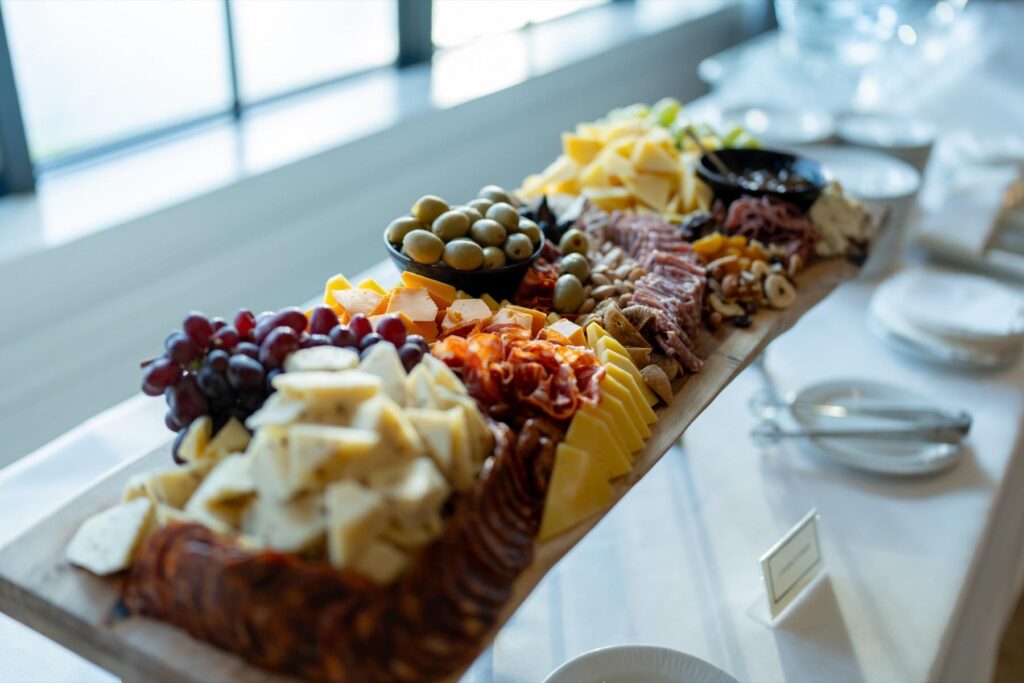
This is the format we have the most opinions about. Before starting Events by Momo, Momo ran a catering company and a tapas wine bar in Midtown Houston, so our starting point for food-driven parties is the kitchen, not the décor.
Who it suits: Food-curious cultures, client entertainment, and teams that would rather talk over a shared plate than a dance floor. Hands-on cooking classes suit small groups. Chef-attended stations and family-style service scale to larger ones.
What it takes: Enough kitchen capacity that every guest actually cooks, allergen control at the prep level rather than just on the labels, a chef who can talk to a room, and timing that gets food out while people are still hungry.
Where it goes wrong: Too many people per cooking station, so half the group watches the other half cook. Tasting portions that send guests to a drive-through afterward. A menu so adventurous that the room fills up on bread.
5. Daytime: The Holiday Lunch or Afternoon Party
Who it suits: Companies with shift workers, parents, long commutes, or a culture that doesn’t do evening events. It also works well when alcohol is off the table anyway, or when the goal is getting the whole company in the room without asking for a night.
What it takes: Paid time, a real meal, a hard stop, and something that marks it as a party rather than a catered meeting: awards, a gift exchange, or a short program.
Where it goes wrong: Holding it in the break room with the same sandwich trays as every all-hands. If it has to be on-site, change the room, the food, and the lighting.
6. Family-Inclusive Parties
Who it suits: Workforces with young families, field and plant operations where families rarely see where their person works, and companies that want spouses and partners included.
What it takes: A daytime or early-evening slot, supervised kids’ programming in a space separate from the adults, food for two very different palates, a clear plan for alcohol, and a venue that is genuinely safe for small children, from stairs to water features.
Where it goes wrong: An adult party with kids bolted on: late start, open bar, nothing for children to do. The reverse happens too, where employees without kids decide it isn’t for them. Give the adults their own zone and their own reason to stay.
7. Remote and Hybrid Teams
Who it suits: Distributed teams, and companies with a Houston office plus remote staff spread across time zones.
What it takes: First, decide whether remote employees are guests or an audience. For a hybrid event, budget for real AV: a dedicated camera, microphones, and one person whose only job is the remote side. For a fully virtual event, keep it short and hosted, with a guided tasting, a cook-along, or trivia, plus kits shipped to homes. Alcohol shipping rules vary by state, so non-alcoholic kits are simpler.
Where it goes wrong: A laptop propped on a table at the in-person party. The remote people can’t hear, can’t be heard, and log off within minutes.
8. Give-Back and Service Events
Who it suits: Mission-driven organizations, companies with an active community program, and teams that want the season to mean something beyond an open bar.
What it takes: A nonprofit partner with real capacity for a group your size, honestly scoped work (sorting, packing, assembling), and a meal or reception afterward so it still feels like a party.
Where it goes wrong: Arriving with sixty people at a nonprofit that can use twenty. Ask what they need before you ask what’s convenient. And if people were expecting a party, don’t make service the only celebration. Pair it with one.
How to Narrow Down Corporate Holiday Party Ideas
Five questions narrow the field faster than any mood board.
Headcount
Small groups have the most options: seated dinners, chef’s tables, cooking classes, and nearly any activity. Mid-sized groups fit seated dinners, receptions, and full activity-venue buyouts. Very large groups tend toward receptions and station-based service, sometimes with a smaller seated dinner for leadership or top performers alongside.
Budget Tier
A lean budget points to daytime lunches, give-back events paired with a simple reception, or activity venues with set packages. A mid-range budget opens up receptions with chef-attended stations, private buyouts, and chef-led dinners for smaller groups. A full-spend budget supports multi-course seated dinners, whole-venue buyouts, and entertainment with production behind it. For how those tiers turn into line items, see our guide to your corporate event budget in Houston.
Alcohol Policy
Settle this before you pick a format, because it changes the format. The usual options are no alcohol, beer and wine only, drink tickets, or a full bar with a firm close time. Whatever you choose, use bartenders with TABC seller/server certification, and offer non-alcoholic drinks that took more thought than a cooler of soda.
Mixed Ages and Family Guests
If guests range from interns to retirees-in-waiting, or include kids, lean toward daytime, food-driven, or family-inclusive formats. Keep the volume at a level where people can talk, and put the program early in the evening.
Dietary Needs
Collect restrictions on the RSVP, not at the door. The FDA recognizes nine major food allergens, and Houston teams routinely add halal, kosher, vegetarian, and vegan needs on top of those. The best menus are built so most dishes work for most people, not so a few guests get a separate plate.
Once the format is set, the room follows from it. Our guide to choosing a Houston corporate event venue covers which venue types fit which formats.
How a Planner Handles This
We start with the group, not the concept: headcount, who’s invited, the alcohol policy, dietary needs, and what didn’t work last year. Then we recommend one or two formats, not ten.
Momo spent eight years in oil and gas supply chain and SAP before starting Events by Momo, so the planning side runs like a project plan, with owners, dependencies, and a run-of-show that accounts for every minute. The food side comes from years of running a catering kitchen and a wine bar. That combination is the reason our corporate event planningclients don’t have to choose between an organized party and good food.
Tell us your headcount and what you’re weighing. We’ll tell you which format fits, and which one we’d skip. Start the conversation here.
Frequently Asked Questions
What are good corporate holiday party ideas for small teams?
Small teams have the widest range of options. A private chef’s table, a hands-on cooking class, a seated dinner in a private dining room, or a buyout of a small activity venue all work well, because everyone can take part at the same time. Choose a format where conversation happens naturally, since small groups notice silence more than large ones do.
How do you include remote employees in a corporate holiday party?
Decide whether remote employees are guests or an audience. For a hybrid event, use a dedicated camera, microphones, and one person managing the remote side. For a fully virtual party, keep it short and hosted, such as a guided tasting or cook-along with kits shipped to homes. Non-alcoholic kits avoid state-by-state alcohol shipping rules.
Should a company holiday party serve alcohol?
That is a company policy decision, and it should be made before the format is chosen. Common approaches are no alcohol, beer and wine only, drink tickets, or a full bar with a firm close time. If alcohol is served in Texas, use bartenders with TABC seller/server certification and offer well-made non-alcoholic options.
Can a corporate holiday party include employees’ families?
Yes. Family-inclusive parties work best in a daytime or early-evening slot, with supervised programming for children in a separate space, food that works for both kids and adults, and a venue that is safe for small children. Give adults their own area so employees without children still have a reason to attend.
Is a daytime holiday lunch a good alternative to an evening party?
For many teams, yes. A daytime party suits shift workers, parents, and employees with long commutes, and it usually brings in more of the company. It works when it is clearly a celebration, with paid time, a real meal, and a short program, rather than a catered meeting in the break room.